|
The goma (Jp. 護摩) ritual of consecrated fire is unique to Esoteric Buddhism. The ritual we perform at Koboji was introduced to Japan by Kobo Daishi in 806 CE. These fire ceremonies are rarely held outside of Japan and are a unique experience that inspires the senses of those who watch.
The goma fire is central to two upcoming services: the Saito O-goma in November and the Hoshi Matsuri star festival in February. Saito O-goma Service Sunday, November 26, 2023 9am | Reception opens at 8am Hoshi Omamori (Star Amulet) Request Due January 12, 2024 We also invite you to request your hoshi omamori that will be blessed in the goma fire created in February 2024. Each omamori is carefully handwritten according to the heavenly stars that quietly correspond with our lives. We request that you submit your forms to the office by January 12, 2024. Dear Members and Friends,
We would like to invite you to our Jizo Matsuri and Shichi-Go-San celebration services for children. These special services are for children ages 7, 5, and 3 years old. JIZO MATSURI & SHICHI-GO-SAN CELEBRATION SERVICE 地蔵まつり並びに七五三子供まつり Sunday, November 19, 2023 – NEW DATE Service Begins 9am Picture Taking & Light Lunch 10:30am During this service, we especially pray to Kobo Daishi and to Jizo Bosatsu for their continuous guidance of our children’s growth, protection, education, happiness, and good health. Jizo Bosatsu is the patron deity of children, travelers, and all those who are vulnerable. We begin the service in front of the Jizo enshrined in the temple courtyard. The celebration of the Shichi-Go-San originated many centuries ago in Japan as the ceremony for children when they become self-conscious and aware of life.
The traditional attire would be kimono for girls and the kimono/hakama for boys. For a donation of $100, Koboji’s Minnyo Kai (Dance Group) will dress participants in traditional kimono attire. However, regular aloha casual attire is also acceptable. Pictures are welcome in the temple hall with children and families making this a special moment to treasure. You do not have to be a temple member to participate in this service, but your registration is kindly requested by Friday, October 13, 2023. ハワイ・マウイ島ラハイナ大火災へのお見舞い 去る8月9日(現地時間8日)、アメリカ合衆国、ハワイ州マウイ島においてラハイナ市街全域が焼失するという未曾有の悲惨事が発生いたしましたこと、痛恨の情、胸を抉られる思いが致します。
この悲惨事によりまして犠牲となられたすべての方々に衷心よりお悔やみを申し上げ、被災されました方々に心よりお見舞い申し上げます。 また、行方のわからない方の早期発見を切に願います。 速やかな復興を願い、お大師様の無辺のご加護を頂かれますよう、遥か高野山よりお祈り申し上げます。 総本山金剛峯寺 座主 高野山真言宗 管長 大僧正 長谷部真道 去る8月9日(現地時間8日)、アメリカ合衆国ハワイ州、マウイ島西部で発生した大規模な山林火災に起因するラハイナ市街全域の焼失に際し、犠牲となられた方々に対しまして深く哀悼の意を表します。 併せまして、被災され、避難を余儀なくされている市民の皆様には心よりお見舞い申し上げます。 本宗海外開教の歴史において、その記念すべき第一歩を印したラハイナの地に対しまして、遙かなる懐古といっそうの愛着を抱きつつ、早期の復興を祈念いたします。 総本山金剛峯寺執行長 高野山真言宗 宗務総長 今川泰伸 Condolences for Maui Wildfire in Hawaii On August 9th (local time, August 8th), a catastrophic and unprecedented tragedy occurred in Lahaina, Maui county, Hawaii, where the entire area was devastated by fire. Our hearts are filled with deep sorrow and regret for this incident. We extend our heartfelt condolences to all those who lost their lives due to this tragic event and offer our sincere sympathies to those who have been affected by the disaster. Furthermore, we earnestly hope for the swift discovery of those who are missing. May a rapid recovery be wished for, and may the universal protection of Kobo Daishi Kukai be bestowed upon everyone. Our prayers come from the distant Koyasan Shindo Hasebe Chief Abbot Kongobuji Head Temple / Koyasan Shingon Buddhism On August 9th (local time, August 8th), due to a massive wildfire that occurred in the western part of Maui Island, Hawaii, United States, we deeply express our condolences to those who lost their lives and mourn their passing in the wake of the complete destruction of Lahaina town. Furthermore, we extend our heartfelt sympathies to all the citizens who have been affected and compelled to evacuate due to the disaster. In the history of the overseas propagation of Koyasan Shingon Buddhism, Lahaina holds the significant first step, and we hold a nostalgic and profound attachment to this place. While embracing these feelings, we earnestly pray for the swift recovery of the area. Taishin Imagawa Executive Director Kongobuji Head Temple / Koyasan Shingon Buddhism
It will soon be time for the annual Obon season. This is a time to pay homage and offer prayers to our deceased family and friends. Although we cannot see them, our ancestors are duly at our sides. They are watching over us, and it is because of them that our families may be happy.
We cordially invite you and your family to attend the Obon services to be held on the following dates and times: Hatsubon Service* Obon Service with Hatsubon*, Toba-Eko, and Segaki Saturday, July 8, 2023, 4 p.m. Sunday, July 9, 2023, 9:00 a.m. Koboji’s Senior Advisor, Archbishop Esho Yagi, will officiate these services. He will be joined by Koboji’s Advisor, Bishop Sean Shimojima, and Reverend Keia Kawanishi. If you would like to honor your ancestors by requesting prayers, please complete the attached form and return it to the temple by Tuesday, June 13, 2023. Ministers will carefully write your requests on thin wooden tablets called toba. A donation of $3 per toba is requested. Requests will not be taken on the day of the service. If you would like to schedule a private Obon service or if you have questions, please do not hesitate to contact the office. Additional information about Obon services, including Koboji’s Bon Dance schedule for July 7 and 8, can be found online at this page. Thank you for taking the time to remember your loved ones. We look forward to your presence once again. Open blessings on May 21 will be held from 6am to noon. The Busshin-ko service will be performed at 1pm.
The temple will not be open for the afternoon session. If the 21st of the month falls on a weekend or holiday, the afternoon session will not be held.
The Holy Day and Candlelight Services commemorate the entry of Lord Kobo Daishi into eternal meditation on Mt. Koya. We believe that Lord Kobo Daishi did not die; instead, He remains in this world to pray for us. Each spring, we pay homage to Him and offer prayers to express our gratitude for the many blessings that we have received. We, who have received great help and have been rescued by Him, should make every effort to attend these services.
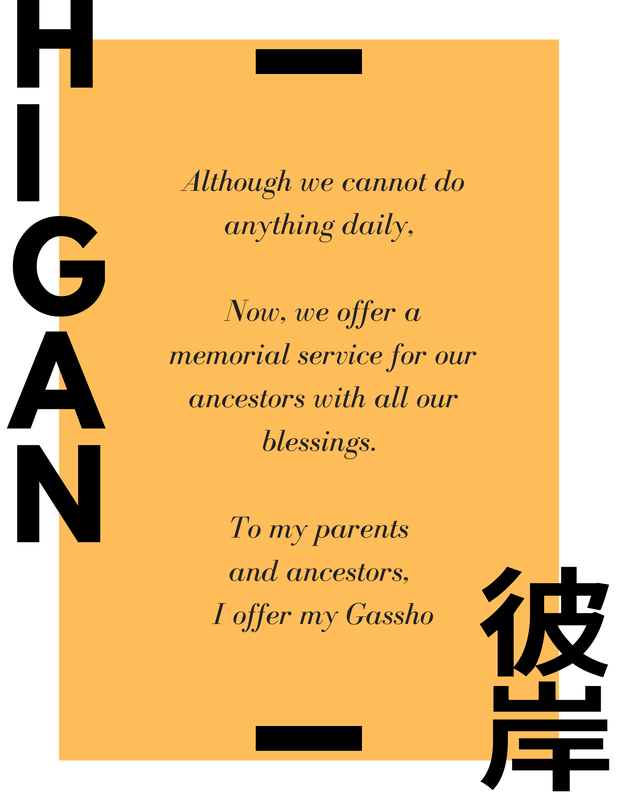
During the Candlelight service, attendees will offer candles to Lord Kobo Daishi on the temple altar. It is the only time in the year where lay members are invited onto the altar. Candles may be received with a $1 donation. Holy Day Service Shomieku Sunday, March 12, 2023 10:00am Candlelight Service Mantoe Tuesday, March 21, 2023 7:00pm The Equinox and Buddha Day service will be held at the end of March. The equinox is a time to honor our ancestors. In Shingon Buddhism, we pray for our ancestors especially at Spring Equinox, O-Bon, and Autumn Equinox when our departed loved ones are closest to us. At that service, we will also celebrate the birth of the historical Buddha Shakamuni. “Hana Matsuri” is literally translated as “flower festival,” but we know it as a time to celebrate Buddha’s birth. Please join us as we remember our departed loved ones and pour sweet tea over the Baby Buddha. Spring Equinox & Buddha Day Service Haru Higan & Hana Matsuri March 26, 2023 10:00am We look forward to welcoming you to these Spring services. If you have any questions or if you would like to speak with or consult with Rev. Yanagihara, please do not hesitate to contact the temple office. |


|
© 2022-2024. KOBOJI SHINGON MISSION. ALL RIGHTS RESERVED. |
|